
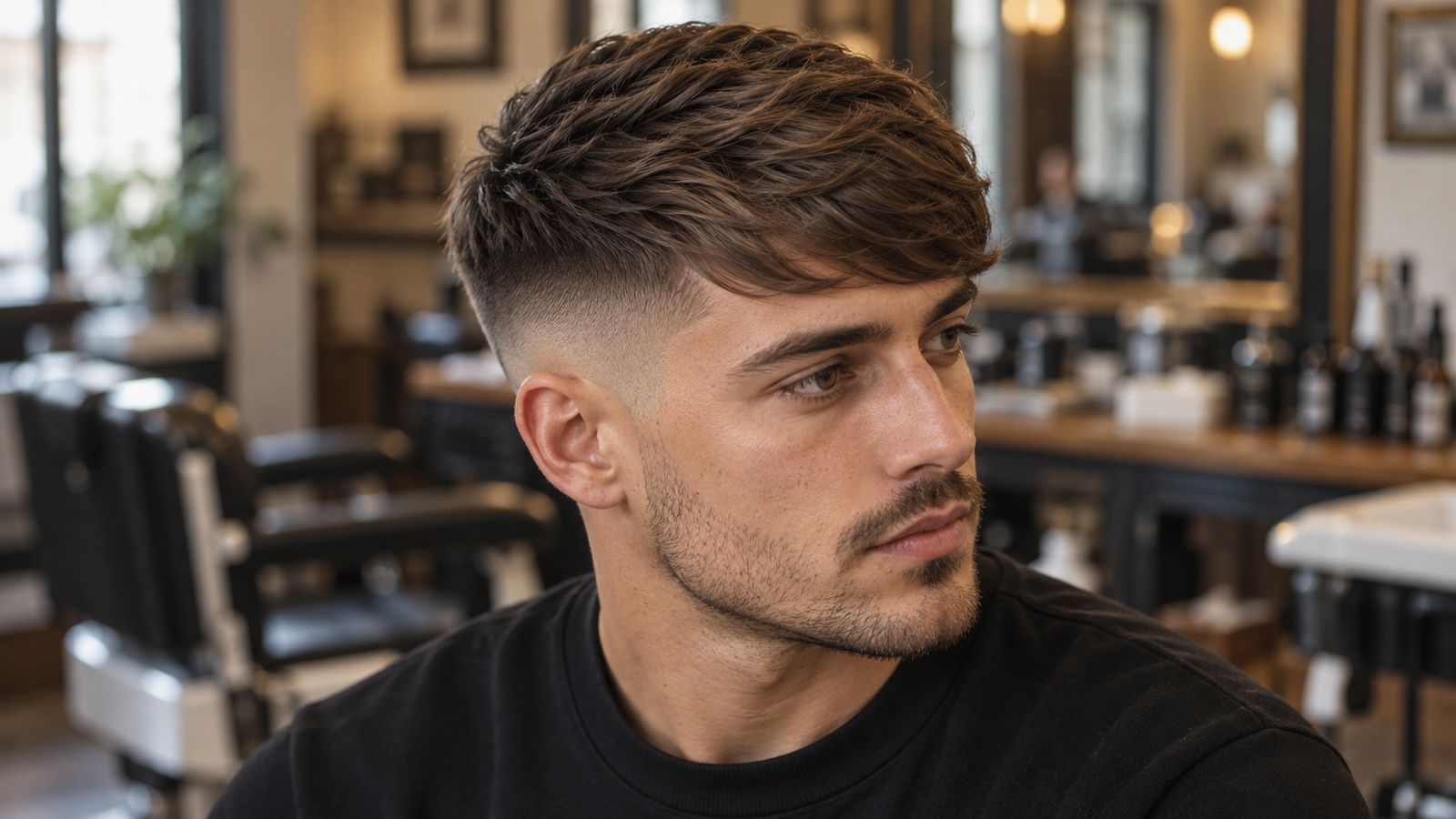
Thinking about getting a scouse trim, but unsure what to ask for? The defining look combines closely faded sides with a longer top and a fringe swept across the forehead. Getting those proportions right matters more than simply knowing the name.
Here’s how to recognise the haircut, explain it to your barber and build a styling routine you can manage at home.
What Is a Scouse Trim?
The scouse trim is a haircut associated with Liverpool, typically featuring short sides, a longer top and a defined, side-swept fringe. Local culture publication Scouse Not English describes the look as closely cut around the ears, with considerably more length on top combed towards one side.
The sideways movement is an important detail. In its coverage of barber Jay’s work, The Courier describes his scouse trim as a skin fade with a combed-over fringe and added texture on top. That provides a useful real-world reference for the style.
Treat the name as a starting point for a consultation. A reference photograph makes the fringe direction, fade height and overall shape much clearer.
The Features to Look For
When choosing a picture to show your barber, look for:
- Closely cut sides and back: These create contrast with the longer hair above.
- Length through the top: Enough hair remains to sweep across rather than stand upright.
- A deliberate fringe shape: The front gives the haircut much of its character.
- Controlled texture: The top can have movement without losing its outline.
Is It the Same as a French Crop?
The two can overlap visually, particularly when both have faded sides. The useful distinction is how the top and fringe sit.
A French crop generally directs the hair forward into a shorter fringe. The scouse look described above has a more noticeable sideways sweep. If your reference shows hair lying across the forehead, explain that detail instead of asking only for a “textured crop”.
Likewise, “skin fade” describes the shortest part of the sides and back. It does not tell your barber how to cut the top.
How to Ask Your Barber for a Scouse Trim
A brief conversation before the clippers come out can prevent a disappointing result.
1. Bring Clear Reference Pictures
Choose a front view and a side view of the same haircut where possible. Look for someone with hair reasonably similar to yours in thickness and texture.
Point out exactly what appeals to you: the fringe, the close sides or the way the top sits. Also mention anything you would change.
2. Agree on the Fade
Discuss both the height of the fade and how short it should finish. Those are separate decisions.
A lower fade keeps more coverage higher up the sides. A higher fade exposes more of that area. If you are uncertain, ask your barber to explain the visual difference before choosing.
3. Protect the Length Needed for the Fringe
Avoid requesting a particular top length simply because someone online recommended it. Your hair needs enough length to reach the position shown in your reference.
Ask the barber to check your natural growth direction, especially if the front lifts or separates.
4. Explain Your Daily Routine
Be honest about how much styling you will do. A carefully blow-dried reference may look different when left to air-dry.
You could say: “I’d like closely faded sides, enough length on top to sweep across, and a defined fringe. Can we adapt this photo to how my hair naturally sits?”
Adapting the Cut to Your Hair
Your texture and growth pattern deserve as much attention as the haircut itself.
Straight hair: Ask whether the fringe will naturally sit across the forehead or need drying into position. A strong growth pattern at the front can affect the result.
Wavy hair: Decide whether you want to preserve the wave or style it smoother. Bring a reference that shows the finish you actually want.
Curly hair: Discuss a curl-friendly interpretation. Keeping curls visible will produce a different finish from a flat, combed-over fringe, even with similar sides.
Fine hair: Ask your barber to preserve enough fullness through the front. Heavy texturising may not give you the result shown on someone with denser hair.
For example, if you have fine, straight hair and your reference has a thick fringe, discuss a lighter version of that shape rather than expecting identical coverage.
How to Style a Scouse Trim at Home
Start with a simple routine, then adjust it with your barber’s guidance.
- Dampen and gently towel-dry your hair. Leave it manageable rather than dripping wet.
- Set the direction. Comb the top and fringe towards the side you agreed on during the cut.
- Dry into shape if needed. Use a gentle heat setting and keep the dryer moving.
- Apply a small amount of product. Follow its instructions for use on damp or dry hair.
- Refine the front. Use a comb for a more defined finish or your fingers for softer separation.
For a less shiny result, look for a product labelled matte. If you prefer a smoother finish, ask your barber to demonstrate a suitable styling cream or pomade.
Start sparingly. Adding a little more is easier than removing excess product from a finished style.
Keeping the Haircut Looking Good
There is a difference between easy daily styling and infrequent maintenance. Closely faded sides can need attention before the longer top needs cutting.
Agree on a maintenance plan based on how crisp you want the finish and how your hair grows. A sides-only tidy-up may sometimes be enough.
Avoid these common mistakes:
- Copying the name without a photo: Your barber may picture a different variation.
- Cutting the fringe too short: You may lose the length needed for the sweep.
- Using too much product: The top can become heavy or overly separated.
- Ignoring the grow-out: Choose a shape you also like between appointments.
Frequently Asked Questions
How Long Does My Hair Need to Be?
There is no single required length. The top and fringe need enough length to reach your preferred position. Show your barber the intended finish before deciding whether to cut or grow it.
Can I Get a Scouse Trim Without a Skin Fade?
You can request a softer adaptation with more coverage on the sides. Keep the longer top and side-swept fringe, and show a reference so the barber understands which features matter most.
Does a Scouse Trim Suit a Receding Hairline?
It depends on the hairline, density and desired fringe. A barber can assess whether there is enough coverage for the sweep; the haircut should not be presented as a guaranteed way to conceal thinning.
How Much Does a Scouse Trim Cost?
Check the chosen barber’s current service menu. Ask whether your booking should be for a standard haircut, skin fade or restyle, and whether styling is included.
Is It Difficult to Style Every Morning?
That depends on how closely the finished shape follows your natural growth pattern. Before leaving the shop, ask to see a routine you can repeat with your own tools.
Ready to Try the Scouse Trim?
The scouse trim centres on closely cut sides, a longer top and a defined sideways fringe. The best starting point is a clear reference, followed by an honest conversation about your hair texture and maintenance routine.
Save front and side photographs of your preferred version, then take them to your next barber appointment.