Birds vs Robots: Epic Showdowns, Strategies, and Technology Insights
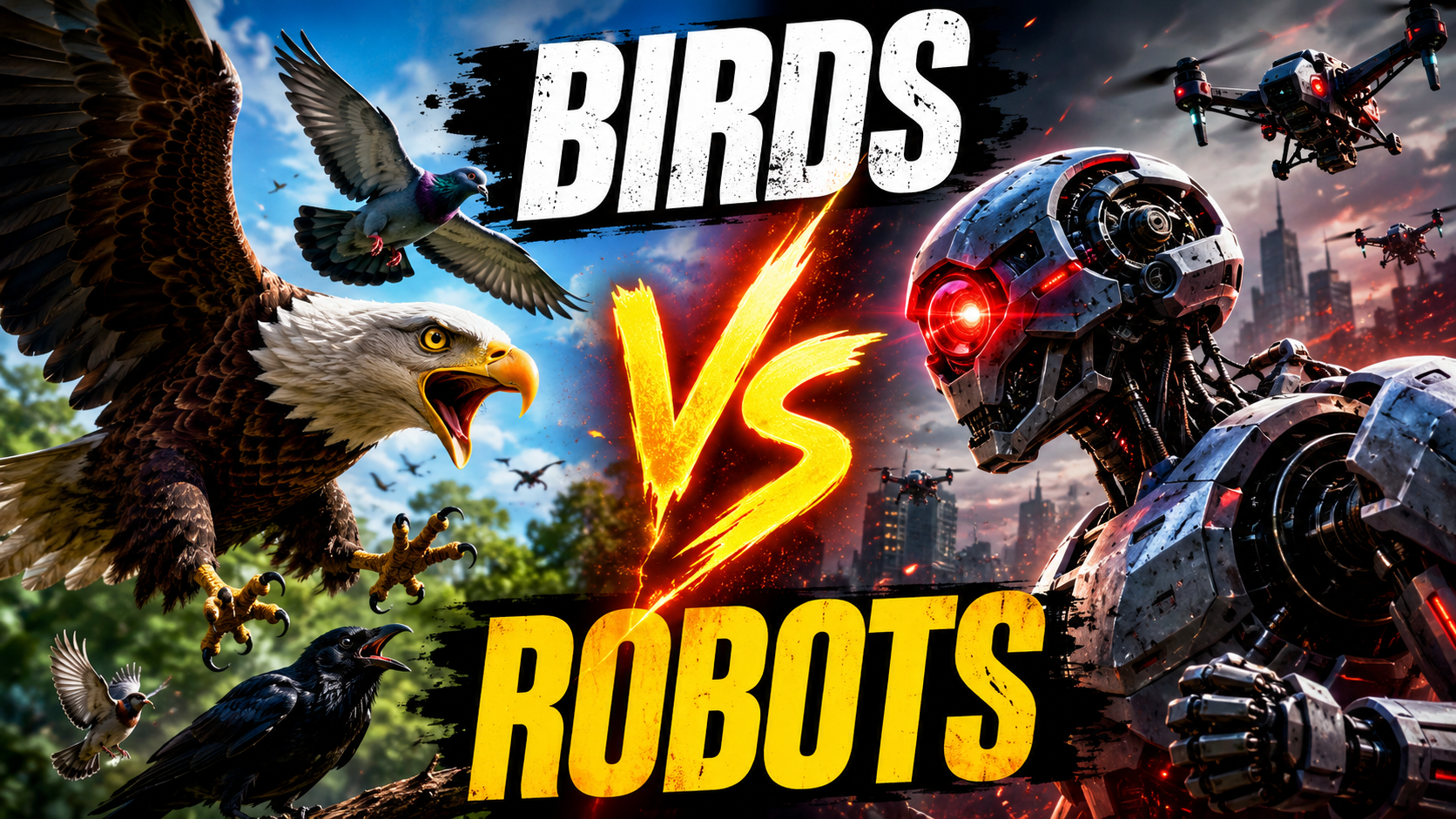
The dynamic interplay between nature and technology has always fascinated scientists, engineers, and enthusiasts alike. Among the most captivating comparisons in recent years is the concept of Birds vs Robots—a metaphorical and literal exploration of how avian creatures and robotic systems interact, compete, and coexist in various ecosystems and technological scenarios. From the evolution of drones inspired by birds to the gaming and simulation arenas where these entities clash, the Birds vs Robots theme encompasses biology, engineering, artificial intelligence, and strategy.
Understanding the Birds: Nature’s Aerial Masters
Birds have dominated the skies for over 150 million years, evolving intricate flight mechanics, acute sensory perception, and complex social behaviors. Their ability to navigate, hunt, and evade predators has inspired generations of scientists and engineers. Birds like falcons, eagles, and swifts showcase incredible aerial agility, rapid acceleration, and precise maneuvering. These abilities make them an ideal benchmark for developing robotic flight systems.
The anatomy of birds is uniquely optimized for flight. Hollow bones reduce weight without sacrificing strength, while specialized muscles provide both power and endurance. Feathers play a dual role: they are aerodynamic surfaces for lift and act as thermoregulators. Birds also possess advanced visual acuity, allowing them to detect subtle movements from long distances—an attribute that many robotics engineers strive to replicate in artificial sensors.
Robots in the Sky: Engineering Marvels
On the technological front, robots, especially aerial drones, have made remarkable progress in replicating bird-like behaviors. From quadcopters to bio-inspired flapping-wing robots, engineers aim to harness the efficiency and adaptability of avian flight. Modern robotic systems incorporate sensors, AI algorithms, and lightweight materials to achieve autonomous navigation and obstacle avoidance.
Unlike birds, robots can be programmed for repetitive tasks, carry payloads, and operate in hazardous environments where living creatures cannot. For instance, drones are deployed in search and rescue missions, wildlife monitoring, and agricultural mapping. The Birds vs Robots narrative here is less about competition and more about technological mimicry, where engineers analyze birds to design efficient robotic counterparts.
The Historical Evolution of Birds vs Robots
The idea of Birds vs Robots is not merely theoretical—it has evolved across decades in research, entertainment, and practical applications. Early robotic prototypes in the mid-20th century attempted fixed-wing flight, lacking the finesse of natural birds. With advancements in materials science and computational intelligence, modern robots increasingly emulate complex bird behaviors.
Simultaneously, video games and simulations popularized the Birds vs Robots motif, often depicting aerial battles between agile birds and technologically advanced robots. These scenarios highlight strategic elements like positioning, speed, energy management, and adaptive behavior, mirroring real-world physics and biological principles.
Gaming and Entertainment: Birds vs Robots in Digital Worlds
The gaming industry has capitalized on the Birds vs Robots theme, creating immersive experiences that blend strategy, physics, and storytelling. Players engage in challenges where birds, each with unique abilities, confront robotic adversaries in dynamic environments. The games often require critical thinking, resource management, and timing precision—mirroring actual predator-prey dynamics.
These virtual confrontations also serve educational purposes. Gamers learn about aerodynamics, energy efficiency, and mechanical design principles while enjoying interactive entertainment. Developers often integrate real-world bird flight patterns and robotic mechanics into gameplay, making simulations highly realistic and strategically challenging.
Strategies in Birds vs Robots Showdowns
In both virtual and real-world scenarios, strategies define the outcome of Birds vs Robots interactions. Birds rely on instinctual maneuvers, flocking patterns, and adaptive learning. For example, pigeons use collective navigation to avoid obstacles, while raptors rely on sudden bursts of acceleration to capture prey.
Robots, conversely, leverage programming, predictive algorithms, and sensor-driven decision-making. In competitive scenarios, such as drone racing or aerial challenges, engineers optimize algorithms for speed, trajectory prediction, and energy efficiency. Understanding these strategies enables better design and performance tuning for robotic systems while offering insights into natural behaviors.
AI and Machine Learning in Robotic Flight
Artificial intelligence (AI) has revolutionized the capabilities of robotic systems, making them increasingly comparable to, and sometimes surpassing, birds in certain tasks. Machine learning models allow robots to learn from environmental feedback, adapt to new scenarios, and optimize flight paths. This is particularly evident in autonomous drones navigating complex terrains, where AI models predict wind patterns, avoid obstacles, and conserve energy efficiently.
The Birds vs Robots paradigm emphasizes learning from biological systems. Engineers use neural networks to model bird flight dynamics, translating them into algorithms that guide robotic behavior. Over time, this convergence of biology and AI may lead to robotic systems capable of near-perfect aerial maneuvers.
Environmental and Ethical Considerations
While Birds vs Robots is often framed as a technological marvel, there are environmental and ethical considerations. The proliferation of drones in natural habitats can disturb wildlife, alter migration patterns, and disrupt ecosystems. Engineers and regulators emphasize responsible deployment, balancing technological advancement with ecological preservation.
Moreover, ethical debates arise regarding autonomous robotic systems. As robots gain decision-making capabilities, ensuring safe interactions with living creatures becomes paramount. Designing robotic systems with fail-safes, restricted flight zones, and minimal ecological impact is essential for sustainable integration.
Bio-Inspired Engineering: Lessons from Birds
One of the most valuable aspects of Birds vs Robots is bio-inspired engineering. Observing bird anatomy and behavior informs advancements in robotics. Flapping-wing drones, for instance, mimic the wing stroke patterns of hummingbirds, allowing highly efficient hovering and maneuvering. Similarly, studying falcon dives inspires high-speed robotic trajectories that minimize drag while maximizing stability.
Bio-inspired designs extend beyond flight. Sensors replicating avian vision improve obstacle detection, while adaptive joint mechanisms emulate bird wing flexibility. This cross-disciplinary study enriches both robotics and biological understanding, showcasing the synergy between nature and technology.
Future of Birds vs Robots Interactions
Looking ahead, the intersection of birds and robots promises exciting developments. Autonomous drones capable of cooperative behaviors, robotic bird companions, and enhanced aerial surveillance systems are on the horizon. Researchers explore integrating AI-driven decision-making with real-time environmental feedback to produce robots that not only emulate but also complement natural birds.
The convergence of robotics, AI, and biological inspiration will shape industries ranging from defense and agriculture to entertainment and ecological research. Birds vs Robots will continue to inspire innovation, demonstrating how understanding nature can unlock new frontiers in technology.
Conclusion: Bridging Nature and Technology
The narrative of Birds vs Robots is a testament to human curiosity and ingenuity. By studying birds, engineers craft robots capable of incredible feats, while digital simulations provide engaging platforms to explore strategic interactions. These showdowns, whether in real-world flight trials or virtual battlegrounds, highlight the fusion of natural intelligence and artificial engineering.
Ultimately, Birds vs Robots is more than a metaphor—it is a lens through which we examine the possibilities of technology, the lessons of nature, and the strategies that emerge when these worlds collide. As robotics and AI evolve, the skies may see new dynamics, where natural and artificial beings coexist, compete, and inspire one another.
FAQ Section
1. What is the concept of Birds vs Robots?
It represents both literal and metaphorical interactions between avian creatures and robotic systems, exploring competition, mimicry, and technological innovation.
2. How do robots mimic bird flight?
Robots replicate wing motions, navigation patterns, and sensory input using flapping mechanisms, sensors, and AI algorithms.
3. Are Birds vs Robots interactions safe for the environment?
Responsible deployment is key. Drones should avoid disturbing wildlife and adhere to ethical and ecological guidelines.
4. Which birds inspire the most robotic designs?
Hummingbirds, falcons, and swifts are commonly studied for their agility, efficiency, and precision in flight.
5. Can AI make robots outperform birds?
In specific tasks like endurance, load-carrying, or precision navigation, AI-powered robots can surpass natural bird capabilities.
6. How is Birds vs Robots represented in gaming?
Through simulations and games where birds with natural abilities face robotic adversaries in strategic challenges.
7. What industries benefit from Birds vs Robots research?
Defense, agriculture, wildlife monitoring, entertainment, and robotics engineering all gain insights from this study.
8. What future developments are expected?
Cooperative drones, bio-inspired robots, AI-driven autonomous navigation, and augmented ecological monitoring are on the horizon.

Post Comment