
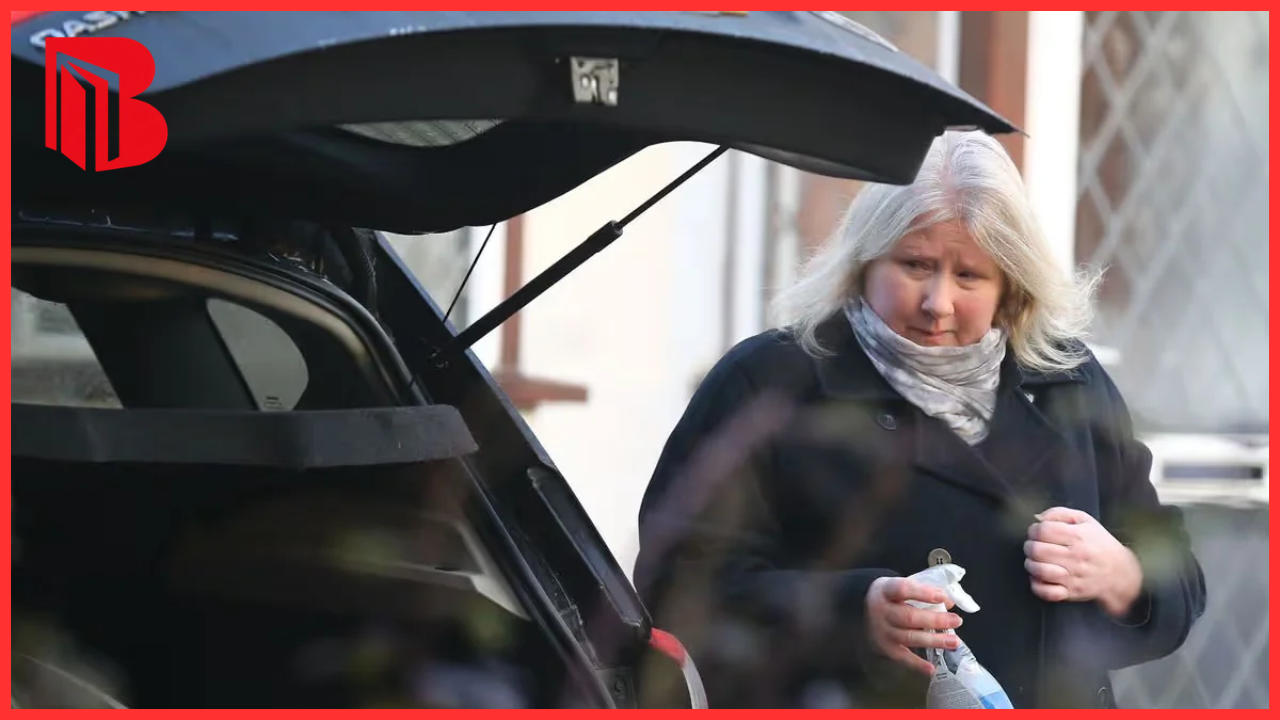
Before Kirsten Farage became the subject of a British election interview, she worked in a Frankfurt bank. She went on to marry Nigel Farage, raise two daughters with him and work as his secretary. For readers wondering whether they are still married, both have spoken on the record: Kirsten confirmed their separation in 2017, and Nigel later described himself as twice divorced.
Much of the coverage of Kirsten began with a question put to somebody else. Journalists asked her husband why he employed her, which languages their family spoke and how his politics fitted with life at home. Kirsten’s own interviews told a more personal story, with room for late-night emails, missed family holidays and a little football rivalry.
Who was Kirsten Farage before she met Nigel?
Born in Hamburg, she was known as Kirsten Mehr before her marriage. She met Nigel in 1996, when he visited Frankfurt on business. Both The Independent and The Times place their first meeting in the city’s financial world, three years before their wedding and well before UKIP’s European election campaign made her a familiar name in British newspapers.
Accounts of her precise job title vary. The Independent described her as an interpreter at a German bank. In his memoir, quoted by The Times, Nigel remembered meeting a government bond broker on a Frankfurt trading floor. Both accounts place her at work when their paths crossed. Neither gives a full employment history that would explain how the two descriptions fit together.
The detail matters because later coverage often introduced her simply as a politician’s secretary. By the time she took on that role, she already had professional experience in Germany. And when the couple first met, it was Nigel who had travelled to her workplace.
Marriage, two daughters and a bilingual home
Kirsten and Nigel married in 1999. It was his second marriage, and the couple had two daughters, Victoria and Isabelle. Nigel also had two sons from his first marriage. That distinction explains why profiles sometimes refer to four Farage children while interviews about Kirsten’s family mention two.
Their daughters grew up speaking English and German. What might ordinarily have been an unremarkable part of family life became a radio interview question in May 2014. After Nigel spoke about hearing other languages on a London train, LBC presenter James O’Brien asked how he felt when Kirsten and their daughters spoke German. Nigel answered that they could also speak English. Kirsten herself was not the guest that day.
Football offers a glimpse of how Kirsten described her German roots on her own terms. During the 2010 World Cup, she spoke about putting a German flag on the family fence and teasing Nigel when Germany won. Her pleasure in having the better footballing argument comes through even in the brief account of the interview.
Why her job became a UKIP election story
In April 2014, UKIP was campaigning for seats in the European Parliament. One of its posters warned British workers about competition for jobs from elsewhere in Europe. BBC political editor Nick Robinson put the obvious question to its leader. How did that message square with his decision to employ his German wife in a publicly funded role?
Nigel answered by describing an ordinary task at an extraordinary hour. Someone had to work through his emails at midnight and prepare his briefing for the next day. He said the role required availability throughout the week and sometimes into the early hours. It was a specific account of what Kirsten did for him, though his suggestion that nobody else would want the job soon became a story of its own.
The job advert that wasn’t a vacancy
A recruitment company called Xpat Jobs decided to test that claim. It posted a mock advert for a personal assistant to a senior European politician, specifying modest pay and long hours. The company told reporters that hundreds of people applied, including applicants from Britain. It was the recruiter’s exercise. Kirsten’s employer had not advertised her post.
The episode is an example of how quickly Kirsten disappeared from a story ostensibly about her. First came a question about her nationality, then an argument about who else could do her job. Readers had to wait until the following month to hear her describe what it actually felt like to do it.
How Kirsten described the working day
In a May 2014 interview with The Telegraph, Kirsten described sitting at her computer in her nightclothes to get the work done. She also spoke about the scarcity of family holidays and the odd experience of turning on the television to see someone the children had little chance to see at home. These were the domestic details missing from the debate over who might apply for her job.
She was frank about the personal cost of the schedule. She worried about Nigel missing meals and getting too little sleep, even as she defended him against accusations of racism. The interview gives a sense of what she was prepared to defend in public and what, as a wife and colleague, she wished he would change.
What did Kirsten say about their separation and divorce?
On 6 February 2017, Kirsten issued a short statement to the Press Association. She said that she and Nigel had lived separately for years and that he had already moved out of the family home. She added that the arrangement suited those involved. That makes February 2017 the date she made the separation public. She did not give a date for the private decision.
Nigel subsequently answered the broader question about divorce himself. In remarks at the US Conservative Political Action Conference, quoted by The Times in 2025, he described himself as “having been divorced twice”. In 2026, Le Monde also reported that his marriage to Kirsten had ended in divorce. The reporting identifies the outcome without establishing the precise date of the final order.
For anyone tracing the relationship through old headlines, the shortest route is to read the accounts in order. Start with Kirsten’s 2017 statement for what she chose to disclose. Then read Nigel’s later remarks for his acknowledgement of the divorce. Finally, check the name attached to more recent coverage: the French political figure identified as his partner is Laure Ferrari.
Frequently asked questions
Is Kirsten Mehr the same person as Kirsten Farage?
Yes. Mehr was her surname before she married Nigel Farage in 1999. It is the name used in accounts of their first meeting in Frankfurt.
Where in Germany is Kirsten Farage from?
The Independent identifies Hamburg as her birthplace. Frankfurt was the city where she was working when she met Nigel, which is why both places appear in accounts of her background.
Did Kirsten and Nigel Farage have children together?
They had two daughters, Victoria and Isabelle. Nigel’s two sons were born during his first marriage.
Was Kirsten Farage a politician?
Her documented role in the 2014 election coverage was as Nigel’s secretary and personal assistant. The person answering questions as UKIP leader and campaigning in the European election was Nigel. [4]
Are Kirsten and Nigel Farage still married?
No. Kirsten publicly confirmed their separation in 2017. Nigel later said he had been divorced twice, and Le Monde subsequently reported his divorce from Kirsten.
Kirsten Farage in her own words
Kirsten Farage’s most revealing contribution to the public record may be her description of an evening at the computer. What sounded on the campaign trail like a debate about immigration was, for the person doing the work, another late night with a briefing to finish and two children at home. To hear her perspective, start with her May 2014 interview. For the marriage timeline, read her February 2017 statement alongside Nigel’s later acknowledgement of their divorce.
Read more : Bigmagz.co.uk